



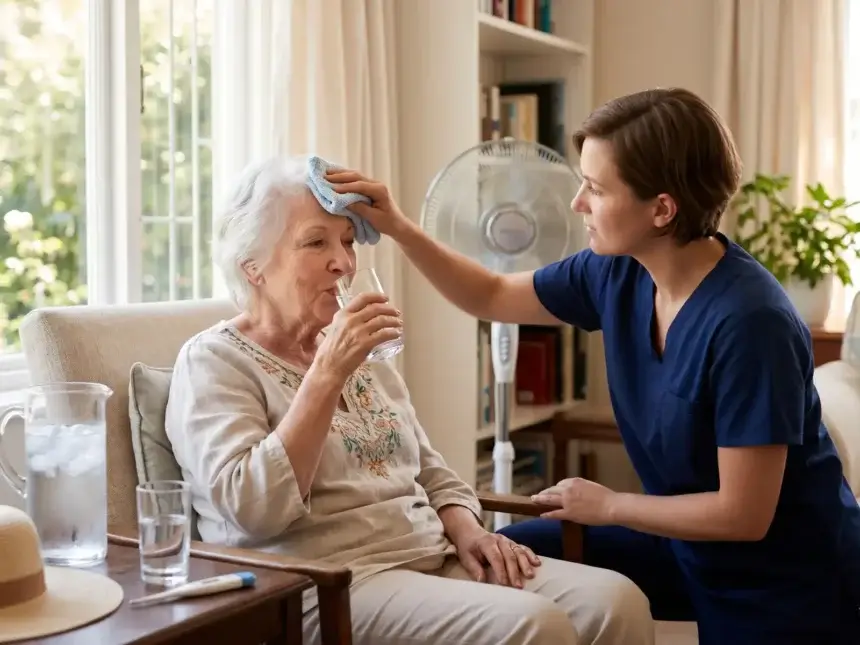
Most people are familiar with hypothermia – the dangerous drop in body temperature caused by cold exposure. Far fewer are familiar with hyperthermia in elderly individuals, its warm-weather counterpart: a dangerous, uncontrolled rise in core body temperature when the body can no longer release heat fast enough. Understanding both conditions – and how aging increases vulnerability to each – is essential for safe, year-round senior care.
- What Is Hyperthermia and How Does It Differ from a Fever?
- Why Elderly Body Temperature Regulation Declines with Age
- Common Causes of Hyperthermia in Seniors
- Key Symptoms to Recognize Early
- How to Prevent Hyperthermia in the Elderly at Home
- The Connection Between Hypothermia and Hyperthermia in Aging Adults
- When Home Care Support Helps Manage Temperature-Related Risks
What Is Hyperthermia and How Does It Differ from a Fever?
Hyperthermia occurs when the body’s core temperature rises because of external heat exposure the body cannot manage – not because of illness or infection. This distinction from fever is medically critical.
A fever is the body’s intentional, regulated temperature increase in response to pathogens. The hypothalamus raises the set point deliberately. Hyperthermia, by contrast, is an uncontrolled failure of the thermoregulatory system. Reducing a fever too aggressively can interfere with immune response; hyperthermia demands immediate external cooling without delay.
Families seeking consistent daily oversight for temperature-related risks can learn more about companion care services at https://carechoice.com/companion-care/. Companion caregivers can help monitor daily well-being and identify potential warning signs early.
Why Elderly Body Temperature Regulation Declines with Age
Elderly body temperature regulation declines through several converging mechanisms. Sweat gland activity decreases, reducing primary cooling capacity. Blood vessel response slows, delaying the movement of warm blood to the skin surface. The hypothalamus becomes less sensitive to temperature changes. Kidney efficiency declines, increasing water loss even when the body is already depleted. Reduced muscle mass alters metabolic heat dynamics.
Add chronic illnesses – cardiovascular disease, diabetes, Parkinson’s – and medications that suppress sweating or increase fluid loss, and the result is an older adult whose thermoregulatory system is fundamentally less capable of managing heat stress than a younger person’s.



Common Causes of Hyperthermia in Seniors
- High indoor or outdoor temperatures without adequate cooling
- Physical exertion in hot or humid conditions
- Dehydration reducing sweat production capacity
- Medications: diuretics, anticholinergics, beta-blockers, antipsychotics
- Chronic conditions affecting circulation or neurological function
- Living alone during heat events without daily check-ins
Key Symptoms to Recognize Early
Hyperthermia progresses in stages. Heat cramps – painful muscle spasms – are the mildest form.
Heat exhaustion follows: heavy sweating, pale clammy skin, rapid weak pulse, nausea, dizziness, and fatigue.
Heat stroke is an emergency: temperature above 104°F, hot dry skin, cessation of sweating, confusion, possible loss of consciousness. Call 911 immediately at any sign of heat stroke.
How to Prevent Hyperthermia in the Elderly at Home
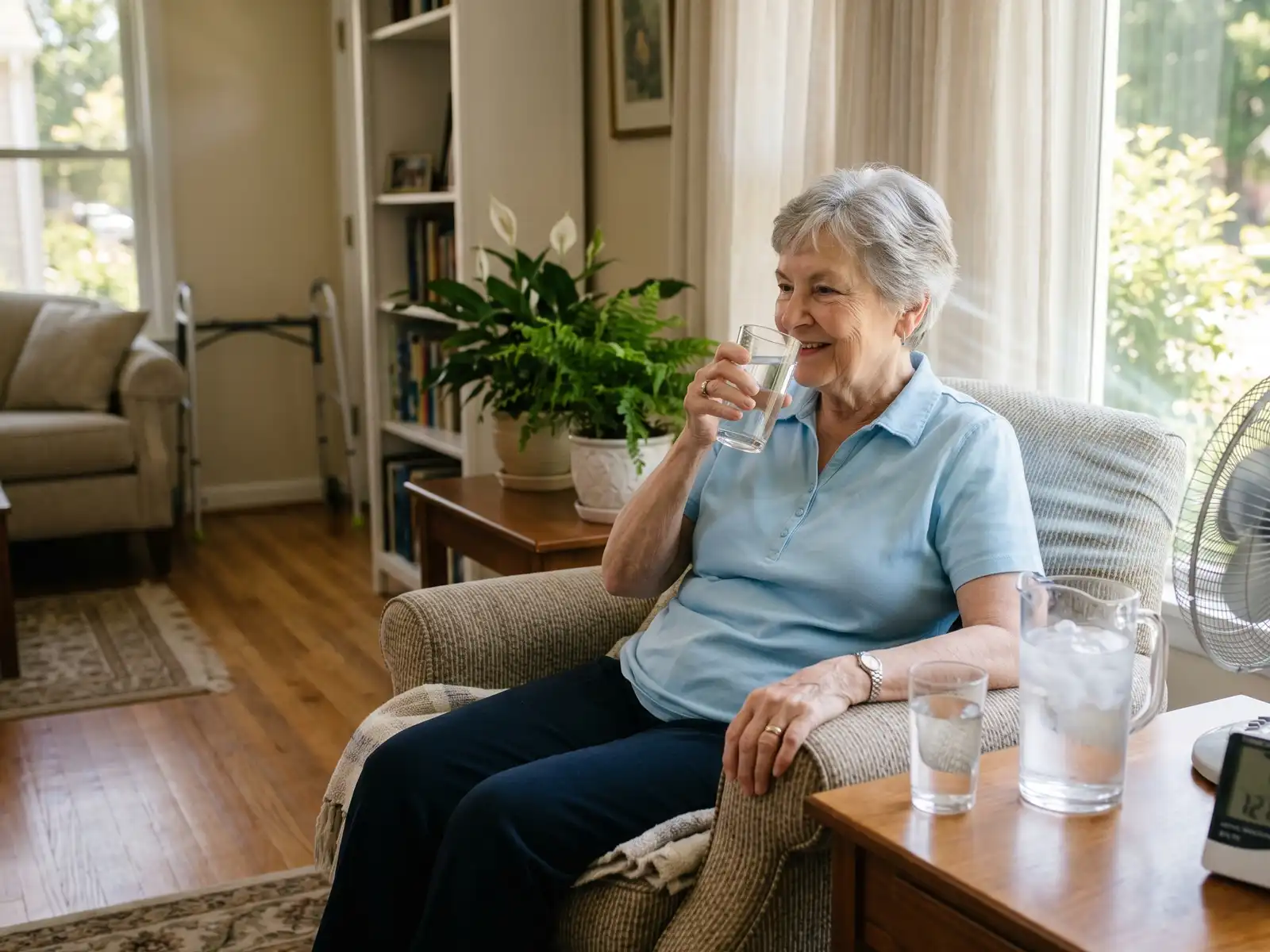
Air conditioning is the most important intervention – non-negotiable during heat advisories. Establish a hydration schedule that doesn’t rely on thirst. Keep outdoor activity to early morning or evening hours. Dress seniors in light, loose, breathable clothing. Use proactive cooling tools: cool damp cloths, personal fans, lukewarm showers.
Knowing how to prevent hyperthermia in the elderly also means reviewing medications annually with the senior’s physician before summer to identify drugs that increase heat risk. Ensure daily check-ins are in place during hot weather – from family, neighbors, or a professional caregiver.
The Connection Between Hypothermia and Hyperthermia in Aging Adults
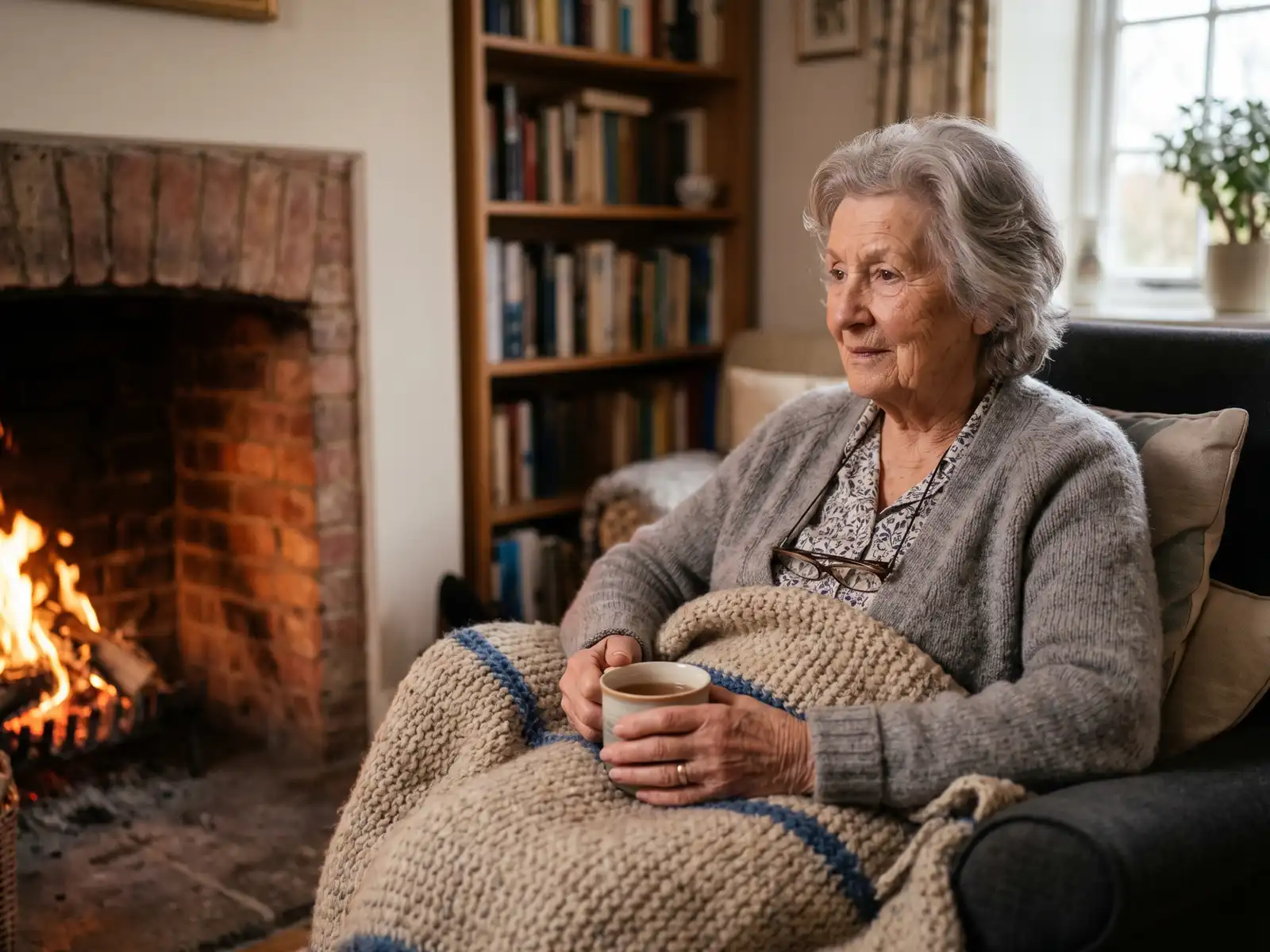
The same impaired thermoregulation that makes older adults vulnerable to hyperthermia also creates vulnerability to hypothermia in elderly individuals – dangerous cold exposure at temperatures that younger adults would tolerate comfortably. Hypothermia in elderly causes include sedentary behavior, malnutrition, certain medications, and reduced metabolic heat generation – many of which overlap with hyperthermia risk factors.
Both conditions share a common prevention framework: environmental controls, consistent monitoring, hydration support, and regular medication reviews. Temperature safety for older adults should be a year-round priority, not a seasonal one.
When Home Care Support Helps Manage Temperature-Related Risks
Preventing hyperthermia in elderly individuals requires consistent daily attention that families managing their own responsibilities can’t always provide. A professional caregiver monitors indoor temperatures, ensures adequate hydration, recognizes early symptoms, and provides the regular human presence that prevents dangerous situations from going undetected until they become emergencies.