



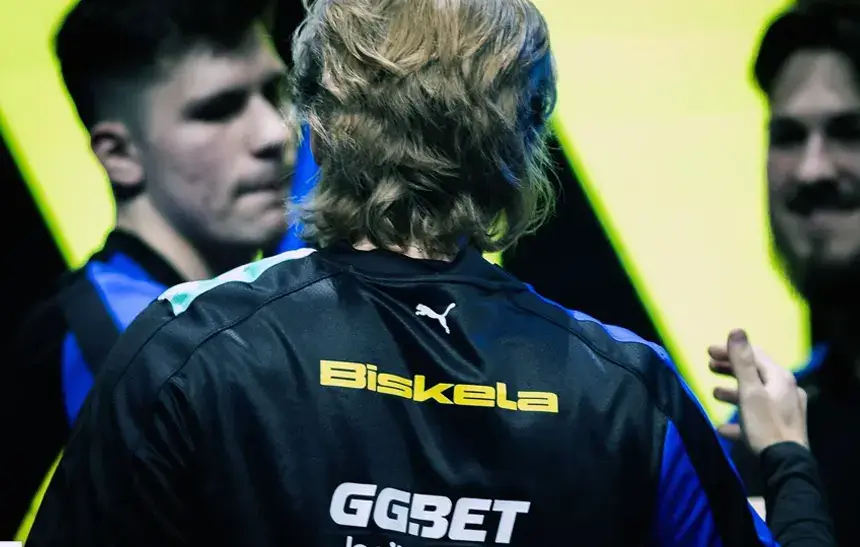
Aleksib Biography: March 21, 2024. Copenhagen, Denmark. Aleksi “Aleksib” Virolainen is standing on stage at the PGL Major – the biggest tournament in Counter-Strike – having just won the whole thing. His team, Natus Vincere, have beaten FaZe Clan in the grand final. Confetti is falling. The crowd is going insane.
- Who Is Aleksib – And Why Should You Care?
- The Job No One Wants the Credit For
- What Getting Benched Actually Teaches You
- Aleksib’s Career Playbook: 4 Lessons That Hold Up Anywhere
- 1. Read the room – every single time
- 2. Stay calm when the stakes are highest
- 3. Manage egos without losing yourself
- 4. Think long when everyone else is thinking short
- Why the Best Leader Isn’t the Best Performer
- What His Story Says About How We Measure Success
- Aleksib Career: Your Questions Answered
And Aleksib’s first words after lifting the trophy? “It feels good to know you won with good teamwork rather than individual brilliance.”
Not “I did it.” Not “we’re the best.” Team. Teamwork. That word, chosen instinctively in one of the highest-pressure moments of his career, tells you everything about who this man is – and why his story matters well beyond the world of esports.
Who Is Aleksib – And Why Should You Care?
Aleksi “Aleksib” Virolainen is a Finnish professional CS2 player known for his strategic leadership and in-game decision-making. CS2 – Counter-Strike 2 – is one of the most popular competitive video games in the world, with Majors drawing millions of live viewers and prize pools in the hundreds of thousands of dollars.
Within that world, Aleksib plays a specific, demanding role: the in-game leader. Think of him as the quarterback calling plays, except the plays change every thirty seconds and the opposition is trying to predict and punish every decision in real time.
His career spans approximately 130 tournaments across teams including ENCE, OG, G2 Esports, Ninjas in Pyjamas, and Natus Vincere. He has been benched, doubted, written off, and questioned at almost every step. And in 2024, he was named HLTV’s Captain of the Year – the highest individual recognition an IGL can receive in competitive CS.



That arc – from expendable to exceptional – is worth understanding.
The Job No One Wants the Credit For
Most people who watch esports follow the fraggers: the players landing the spectacular plays, the clutch kills, the highlight-reel moments. The IGL is the one in the background, talking into the mic, reading the map, adjusting the plan.
When the team wins, the star players get the MVP awards. When the team loses, the IGL gets the blame. It’s the same dynamic you see in business – the strategist who built the playbook rarely gets the standing ovation.
The numbers reflect this. Aleksib’s average kill count per round sits well below the team’s primary rifles and AWPers. That’s not a weakness – it’s the cost of his actual job. He’s spending cognitive resources on the whole team’s positioning, not his own crosshair placement. His ability to quickly adapt to difficult situations and make flash decisions under fire is precisely what drove NaVi’s run to six consecutive finals in 2024.
That’s a different kind of skill entirely. And it’s one most organizations take a long time to appreciate.
What Getting Benched Actually Teaches You
Here’s the part of Aleksib’s career that people don’t talk about enough.
After leading ENCE to a surprise second-place finish at IEM Katowice 2019 – defeating world-class opponents through disciplined strategy and exceptional team cohesion – Aleksib was unexpectedly removed from the roster later that year. The community was stunned. Analysts were critical. ENCE went on to underperform significantly without him.
Then came OG, where he built a team from scratch in a brand-new CS organization. G2, where expectations were enormous and results were mixed. Then NIP. Each time, the narrative around him was some version of: “great IGL, but can’t get it done at the highest level.”
When he signed with Natus Vincere in 2023, he openly acknowledged that his recent resume “doesn’t look pretty” on paper – but said he was motivated to prove he deserved his chance.
That sentence is worth sitting with. Aleksib’s didn’t rewrite history. He didn’t blame the organizations or the rosters. He named the reality, accepted it, and focused on what was next.
That’s not a minor character detail. That’s a leadership disposition – one that most people in high-pressure roles never develop because getting cut stings too much to learn from honestly.
Aleksib’s Career Playbook: 4 Lessons That Hold Up Anywhere
1. Read the room – every single time
One of Aleksib’s most underrated qualities is how differently he leads depending on who’s in front of him. At G2, he noted that NiKo and huNter- didn’t need micromanaging at all – he could instantly see it, and he adjusted. At NaVi, working with players from different countries and cultures, he adapted again.
This matters because most leaders have one default mode: their own. The best ones figure out what each person actually needs – structure, freedom, challenge, reassurance – and deliver that specifically. Aleksib does this in real time, mid-match, with money on the line.
2. Stay calm when the stakes are highest
One of his earliest notable quotes, from ESL One: Cologne 2018, was about keeping communication calm as the key to winning. That was 2018. By 2024, it was still the principle guiding him.
After a brutal loss to Team Spirit at the Shanghai Major in late 2024, when NaVi managed just two rounds in a map, Aleksib told HLTV: “I’m never going to count us out and I’m going to do the most I can to secure a win.” No panic. No blame. Just the next problem to solve.
Teams – and employees – take their emotional temperature from their leaders. If the leader spirals, everyone spirals. Aleksib seems to genuinely understand this.
3. Manage egos without losing yourself
Leading elite talent is nothing like managing a regular team. Star players in esports – like NiKo, one of the most mechanically gifted players in CS history – have strong opinions, high expectations, and very little patience for structure that slows them down.
Aleksib navigated this at G2 with NiKo and huNter- and at NaVi with s1mple and b1t. He didn’t try to clip their wings. He built systems around their strengths while still maintaining a coherent tactical identity. That balance – giving stars room to be stars while keeping the team pointed in one direction – is genuinely difficult, and most leaders get it wrong in one direction or the other.
4. Think long when everyone else is thinking short
After a match in 2025, Aleksib said plainly: “I’m going to be honest: I don’t think we are where we want to be yet this year, but this victory is super important for us.” No false confidence. No overclaiming. He was publicly tracking a longer arc while managing the moment.
This kind of long-game thinking is rare in high-pressure environments, where the temptation is always to react to the last result. Aleksib seems wired for trajectory, not just score.
Why the Best Leader Isn’t the Best Performer
This is the argument worth debating: should the person leading the team also be the best individual performer on it?
In most traditional sports, the answer has historically been yes – the captain is usually among the best players. But in high-complexity, high-pressure environments, the cognitive load of leading often makes it impossible to also be the top performer. You’re running two jobs simultaneously.
Aleksib’s kill stats are consistently below average for a pro-level player. His rating on HLTV – the primary individual performance metric – is modest. And yet, in 2024 alone, NaVi won the CS2 Major in Copenhagen and competed in six consecutive finals under his leadership.
The results are in the team’s numbers, not his personal ones. If you only looked at his individual stats, you’d cut him. That’s exactly what several organizations did – and then regretted it.
How many workplaces are making the same mistake right now? Measuring the leader by the same metrics as the individual contributors, then wondering why the team isn’t performing?
What His Story Says About How We Measure Success
HLTV ratings. Kill-to-death ratios. MVP medals. None of these capture what Aleksib actually contributes — they’re the tools esports built to measure individual greatness, and they’re measuring the wrong thing.
His competitors for Captain of the Year in 2024 were karrigan of FaZe Clan and chopper of Team Spirit — both respected IGLs with longer trophy cases. He beat them anyway, because the voters were looking at something harder to quantify: how well he held a team together when everything was going wrong.
The same measurement problem exists everywhere. Bonuses go to the loudest salesperson, not the manager who built the system that made everyone better. The most visible contributor gets promoted, not the one quietly ensuring nothing fell apart. Trophies go to scorers, not architects.
Aleksib’s career doesn’t just tell us something about esports — it tells us something about what we tend to reward, and what we consistently undervalue until it’s gone.
When ENCE moved on from him in 2019, the Finnish organization’s results declined sharply. G2 struggled to find consistent direction after his departure in 2022. NIP told the same story shortly after.
Aleksib Career: Your Questions Answered
What teams has Aleksib played for?
Aleksib has played for several organizations across his career, including ENCE, HAVU Gaming, OG, G2 Esports, Ninjas in Pyjamas, and Natus Vincere. He also started out in the Finnish semi-pro scene with smaller teams like Recursive eSports before breaking through at the top level. Each move came with its own expectations – and its own set of lessons.
Has Aleksib ever won a Major?
Yes – and it took a decade of professional play to get there. He became the first Finn to win a CS Major, doing so at PGL Major Copenhagen 2024 with Natus Vincere. Before that, his closest moment was a runner-up finish at IEM Katowice 2019 with ENCE – a result that briefly made him one of the most talked-about IGLs in the world, right before he was benched.
How much does Aleksib earn?
Prize money alone tells most of the story. Aleksib has earned over $891,000 in tournament winnings across 135 events, with his single largest payout being $100,000 from the PGL Major Copenhagen 2024. That figure doesn’t include his base salary from Natus Vincere – which, for a player at his level and profile, is estimated to be in the range of $20,000–$30,000 per month, though exact contract terms aren’t public. Top-tier CS2 IGLs at marquee organizations typically sit in that range.
What is Aleksib’s nationality?
Aleksib was born and raised in Finland. He’s one of the most prominent Finnish esports athletes of his generation, and one quote from a Finnish esports analyst captures it well: “For a long time, the most iconic Finnish player was allu. But now, that title belongs to Aleksib.”
What does IGL mean in CS2?
IGL stands for in-game leader – the player responsible for calling strategies, reading the opponent, and making real-time tactical decisions for the entire team during a match. It’s not a mechanical role. You’re not expected to top the kill leaderboard. You’re expected to outthink the other team’s leader, round by round, under full tournament pressure. It’s closer to a chess player’s mindset than a traditional athlete’s – and it’s the role Aleksib has built his entire career around.
Why was Aleksib removed from ENCE despite their success?
This one still divides the CS community. Despite leading ENCE to a second-place finish at IEM Katowice 2019 – one of the most celebrated underdog runs in CS history – Aleksib was unexpectedly removed from the roster later that year, a decision that surprised both fans and analysts alike. ENCE’s subsequent results were significantly weaker. No official explanation fully satisfied the community, and the move is still held up as a cautionary tale about organizations misjudging what their IGL actually contributes.